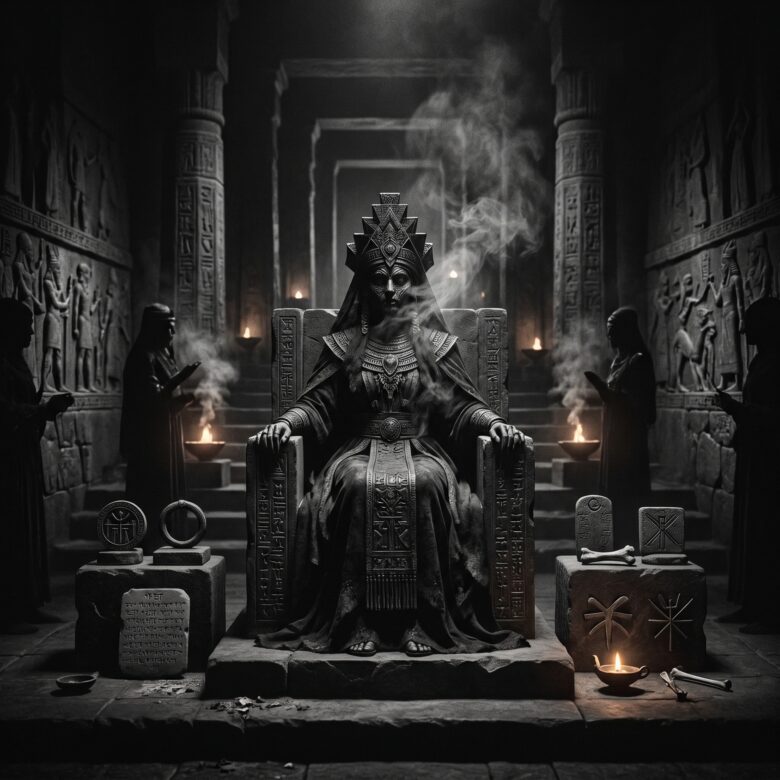
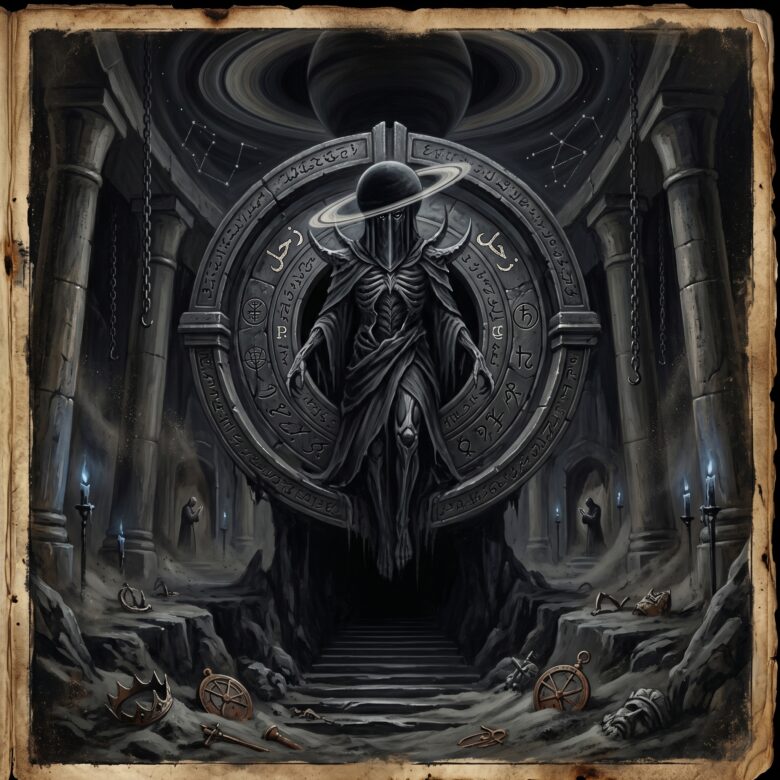
You do not call on Zuhal for quick money, for love spells, or for protection from a mild inconvenience. You call on Zuhal when you need to understand the weight of your own choices. You call on Zuhal when you are ready to have your illusions stripped away by the greater malefic. You call on …
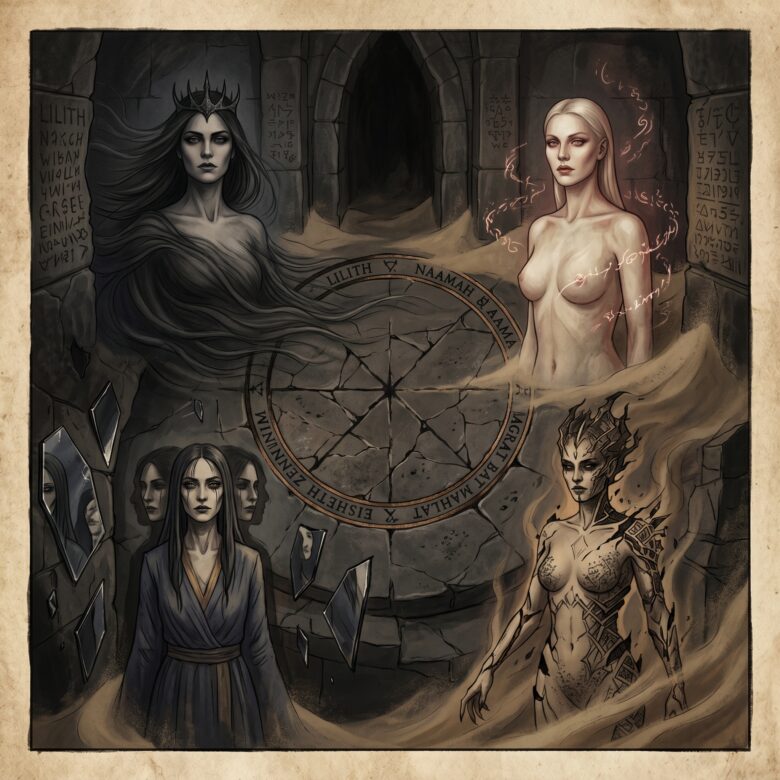
The Four Queens of Demons: Lilith, Naamah, Agrat bat Mahlat, and Eisheth Zenunim
In the shadow realms of Canaanite and Middle Eastern demonology, four figures sit enthroned above the legions. They are the Queens of Demons, the Matriarchs of the sitra achra—the “other side,” the realm of impurity and chaos that opposes and balances the divine order. Their names are Lilith, Naamah, Agrat bat Mahlat, and Eisheth Zenunim. These …
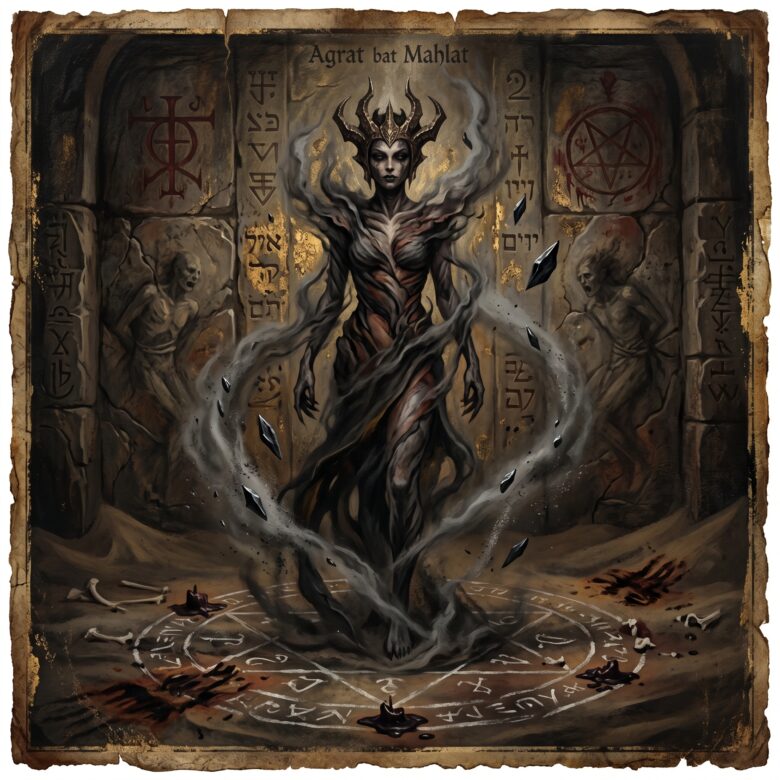
Agrat bat Mahlat: The Whirling Queen of Midnight and Hunter of the Night
Agrat bat Mahlat hunts between midnight and the fifth hour of the night. That is her time, her domain, her hunting ground. If you are walking alone in those hours—on a deserted road, through an empty courtyard, across the threshold of sleep, through any unlit liminal space—you are in the territory of Agrat bat Mahlat. …
Bune is the 26th spirit of the Ars Goetia, and he is unusual. Most Goetic spirits specialize. Bune does not. He handles wealth, eloquence, wisdom, and the authority to raise the dead. That is a rare combination. He appears as a three-headed dragon. The first head is like a Dog. The second is like a …
Paimon is one of the most recognizable spirits in the Ars Goetia, the 17th-century grimoire that lists 72 demons ranked within a pseudo-Solomonic hierarchy. He is the ninth spirit, a king commanding 200 legions, and his description is distinctive: a crowned figure with an androgynous, beautiful face riding a dromedary, preceded by a host of …
Amprodias is not ancient. He has no Sumerian tablet, no Greek inscription, no medieval grimoire entry. He appears fully formed in the 1970s, in the work of Kenneth Grant, within the Typhonian current of Thelemic occultism. And yet, for practitioners working the Qliphothic Tree of Death, he is real enough. He is the intelligence of …
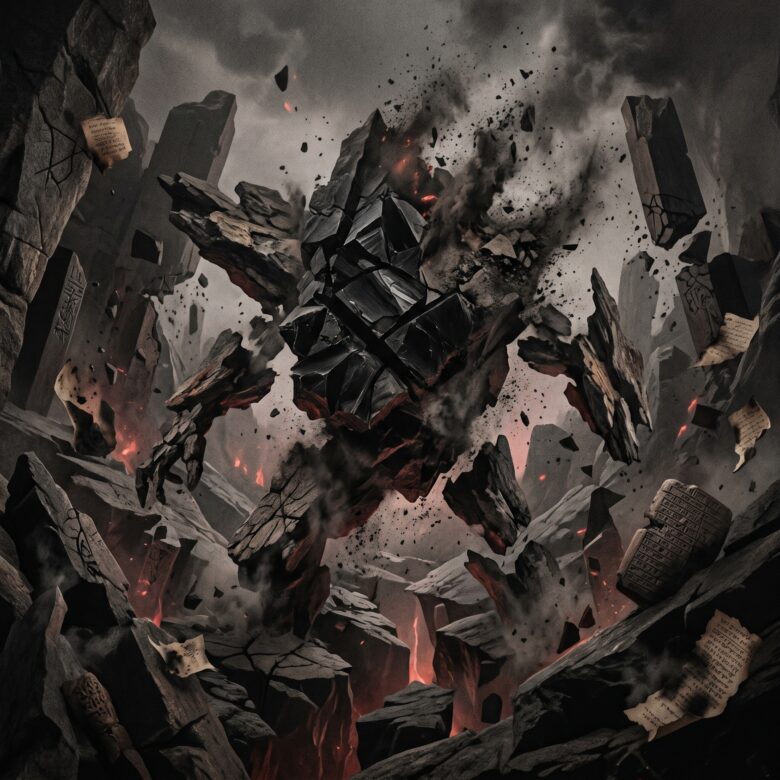
1. What This Entity Is Asag is a mountain demon from Sumerian tradition, appearing as the primary adversary of the warrior god Ninurta in the Lugal-e epic (circa 2nd millennium BCE). In Akkadian transmission, the name becomes Asakku and shifts from a specific named demon to a whole class of malevolent forces. In his original form, Asag is territorial. …
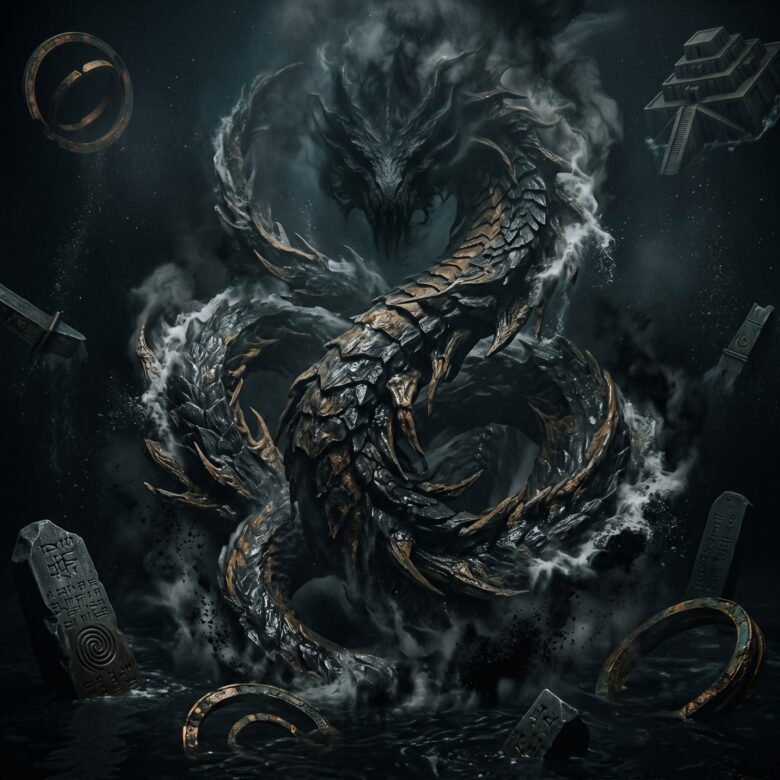
1. What This Entity Is Tiamat is the primordial salt water sea personified in Babylonian cosmology, best known from the Enūma Eliš (circa 1100–600 BCE). Her name is cognate with tamtu (Akkadian for “sea”). She is the chaos monster who opposes the younger gods and is slain by Marduk, whose body is then used to create heaven and earth. …
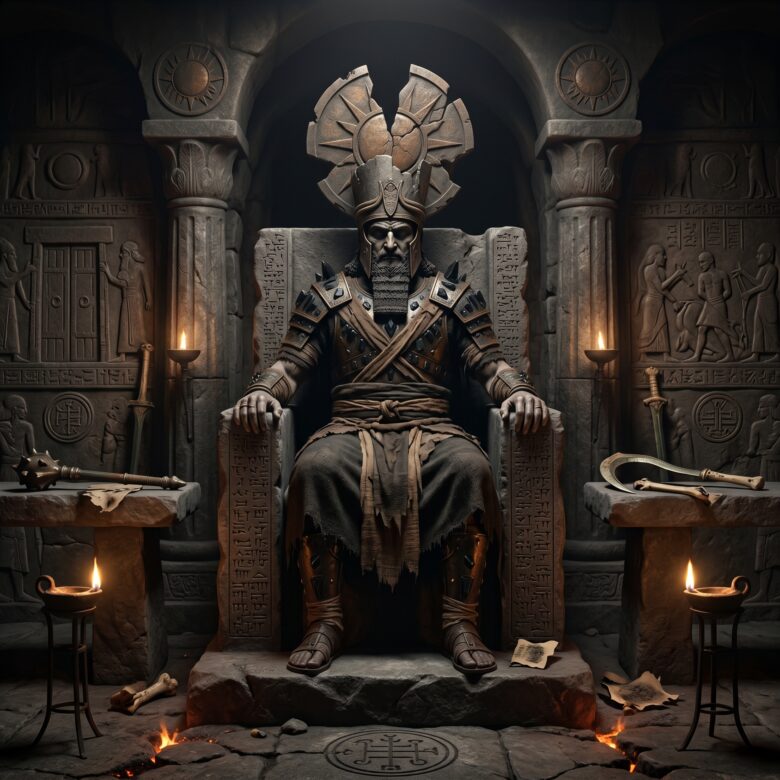
1. What This Entity Is Nergal is a Mesopotamian deity of plague, war, and the underworld, attested from the Old Babylonian through Neo-Assyrian periods (circa 1800–600 BCE). He has a temple (E-Nergal in Cuthah), a priesthood, and a place in the formal pantheon. His planetary correspondence is Mars—one of the few stable astrological mappings in …
1. What This Entity Is Ereshkigal is the queen of the underworld (Irkalla) in Mesopotamian tradition, spanning Sumerian through Neo-Babylonian periods (circa 2100–500 BCE). Her name translates as “Lady of the Great Earth”—a reference to the underworld, not the surface world. In Akkadian sources, she appears as Allatu or Allatum. Her domain, Irkalla, so thoroughly …