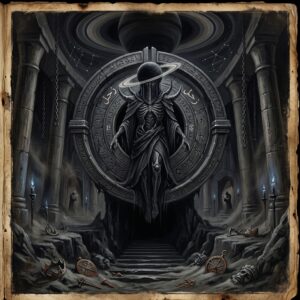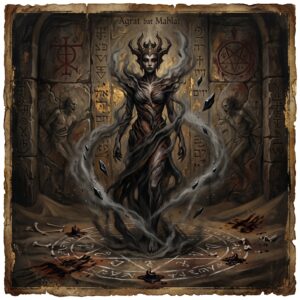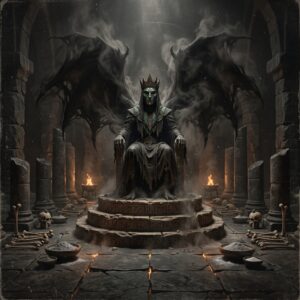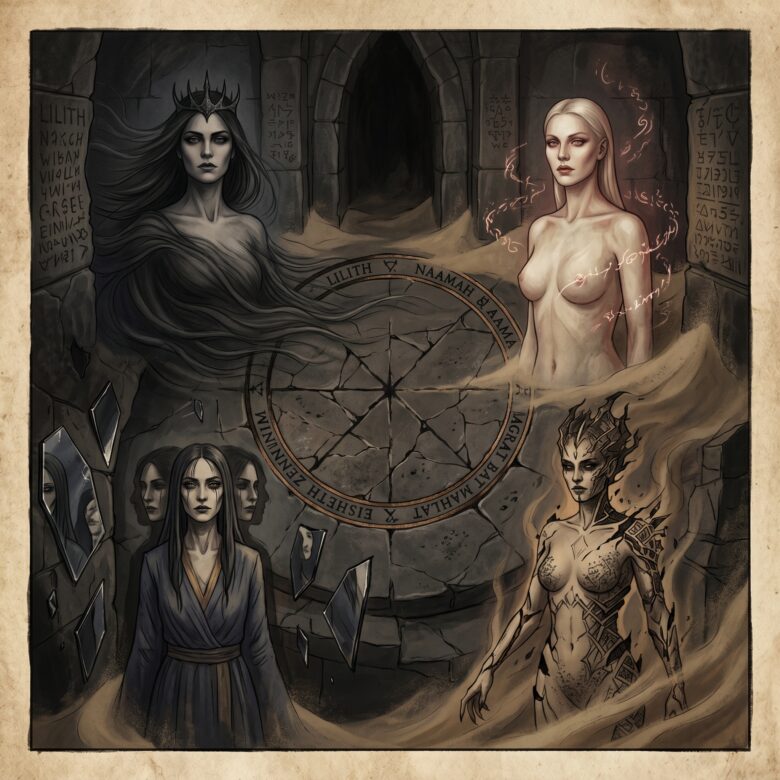
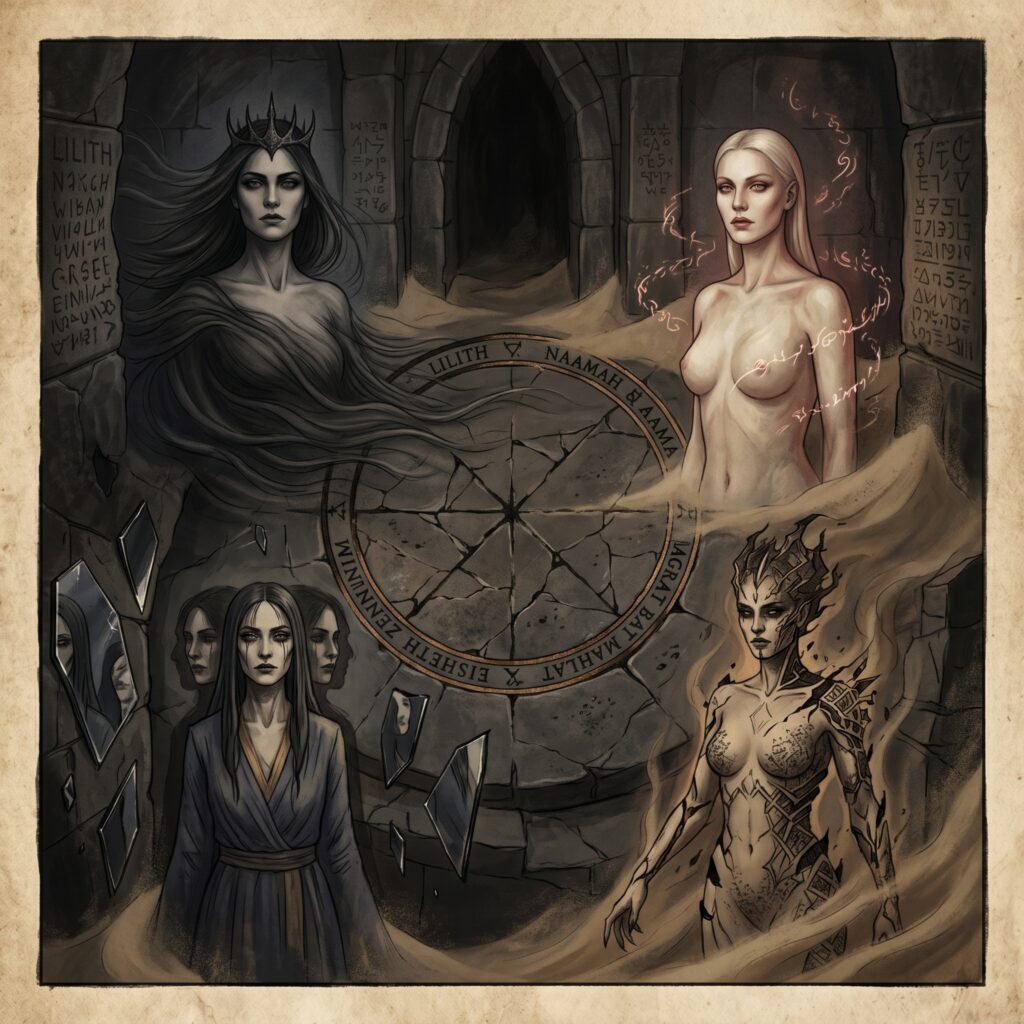
In the shadow realms of Canaanite and Middle Eastern demonology, four figures sit enthroned above the legions. They are the Queens of Demons, the Matriarchs of the sitra achra—the “other side,” the realm of impurity and chaos that opposes and balances the divine order. Their names are Lilith, Naamah, Agrat bat Mahlat, and Eisheth Zenunim.
These four Queens of Demons are not worshipped in traditional Middle Eastern religious practice. They are not invoked. They are avoided, protected against, and—in esoteric Kabbalistic practice—sometimes contemplated as the necessary shadow of the sacred. But in modern demonolatry and Left Hand Path occultism, the four Queens of Demons have gained a different status. They are approached as deities, as initiators, as sovereign powers of the night.
This dossier on the four Queens of Demons treats each Queen individually and the four as a collective system. Their functions overlap—all four Queens of Demons are succubi, all draw seed, all mother demons—but each Queen of Demons has a distinct domain, a distinct behavior pattern, and a distinct relationship to the practitioner. Understanding the four Queens of Demons means understanding the Canaanite and Palestinian demonological landscape from which they emerged.
Part One: Lilith — The First Queen of Demons
Lilith is the primary Queen of Demons, the oldest of the four Queens of Demons, the most powerful, the most feared. She has the deepest history among the four Queens of Demons, reaching back to Mesopotamian lilitu spirits—female night demons who preyed on men and children in ancient Middle Eastern lore. But her most influential narrative comes from the medieval Alphabet of Ben Sira (8th–10th century CE), where she is Adam’s first wife.
The story of Lilith, first among the four Queens of Demons, is well known: Lilith was created from the same earth as Adam, not from his rib. She refused to lie beneath him, claiming equality with Adam. When Adam tried to force Lilith, she spoke the ineffable name of God, grew wings, and flew away from the Garden of Eden. God sent three angels to retrieve Lilith, but she refused to return. Lilith was cursed: a hundred of her children would die every day, and Lilith would become a demon who preys on newborn infants and sleeping men.
In Kabbalistic tradition (the Zohar, 13th–14th century), Lilith is the wife of Samael (the archangel of death and poison) and the mother of countless demons. Lilith is the Queen of the sitra achra, the female counterpart to Samael’s male sovereignty over the demonic realm among the four Queens of Demons. Lilith is also, paradoxically, the consort of God on the Sabbath in some mystical interpretations—the “shadow bride” who balances the Shekhinah (divine presence). Among the four Queens of Demons, Lilith reigns supreme.
Nature & Behavior of Lilith
Lilith is a predator of infants and sleeping men. Her two domains as one of the four Queens of Demons are childbirth (where Lilith kills newborns) and nocturnal emission (where Lilith draws seed to create demons). Lilith is not subtle. Lilith does not negotiate. Lilith is a force of reproductive chaos, the woman who refused subordination and was punished by becoming the eternal enemy of ordered reproduction. Among the four Queens of Demons, Lilith is the most feared by traditional practitioners.
In the traditional Canaanite and Middle Eastern framework, Lilith is not a spirit to work with. Lilith is a spirit to protect against. Amulets for childbirth (inscribed with the names of the three angels who pursued Lilith) are hung in birthing rooms to ward off this Queen of Demons. Men sleep in company, not alone, to avoid Lilith’s nocturnal visits from this Queen of Demons.
But in modern demonolatry and Left Hand Path practice, Lilith is approached as a sovereignty figure—the Queen of Demons who refused to bow. Lilith is the patron of women who will not submit, of outcasts, of those who choose exile over subordination among the four Queens of Demons. Lilith’s energy is sharp, dark, uncompromising. Lilith does not comfort. Lilith challenges.
Contact & Ritual Approaches for Lilith
Traditional Canaanite and Middle Eastern practice: No invocation of this Queen of Demons. Protective amulets against Lilith, recitation of protective verses, sleeping in company to avoid Lilith.
Modern reconstruction: Invocation of Lilith through her sigil (modern, not historical), enn chants for this Queen of Demons, offerings of dark wine, red candles, blood (historically not traditional, modern practice), menstrual blood (contemporary feminist ritual dedicated to Lilith). Timing for Lilith: Monday (Moon), Friday night (Sabbath inversion), the dark moon—all appropriate for this Queen of Demons.
Working With Lilith
Practitioners who work with Lilith, first among the four Queens of Demons, report:
- Increased autonomy and refusal to submit to illegitimate authority, channeling Lilith’s rebellious nature
- Confrontation with shame around sexuality and bodily autonomy, guided by Lilith
- Protection from sexual violence (Lilith as avenger, the Queen of Demons who defends the violated)
- Difficulty with conventional relationships (Lilith’s solitary energy among the four Queens of Demons)
- Sleep disturbances (night visits from Lilith, lucid dreams, occasional sleep paralysis caused by this Queen of Demons)
- Intensified shadow work, particularly around rejection, exile, and the cost of freedom—all domains of Lilith
Lilith is not gentle. Lilith is the Queen of Demons who chose the desert over the Garden. Working with Lilith means accepting the desert.
Part Two: Naamah — The Singer Among the Queens of Demons
Naamah is the second Queen of Demons in most Kabbalistic hierarchies of the four Queens of Demons. Naamah’s origins are unusual among the four Queens of Demons: she begins as a human. Genesis 4:22 names Naamah as the sister of Tubal-Cain, daughter of Lamech and Zillah. Naamah is human in the text. But in midrashic and Kabbalistic tradition from the Middle Eastern region, Naamah is transformed into a demon and elevated among the four Queens of Demons.
The Zohar describes Naamah as a seducer of men, a mother of demons, a singer and dancer who draws men from their sacred study. Naamah is the mother of Asmodeus (the king of demons in some traditions) and one of the primary consorts of Samael among the four Queens of Demons. Naamah’s name means “pleasant” or “lovely”—the seduction is in Naamah’s very name, marking her place among the four Queens of Demons.
Nature & Behavior of Naamah
Naamah is the Queen of Demons associated with seduction. Naamah does not hunt violently (like Lilith’s infant-killing or Agrat’s midnight stalking among the four Queens of Demons). Naamah attracts. Naamah sings. Naamah dances. Men are drawn to Naamah, leave their sacred obligations, and in the encounter with this Queen of Demons, spill seed that Naamah uses to create demons.
Naamah’s domain among the four Queens of Demons is sexual desire as a distraction from the divine. In traditional Middle Eastern religious practice, Naamah is a warning: the beautiful woman who leads the righteous astray, embodied as this Queen of Demons. In modern practice, Naamah is approached as a Queen of Demons of pleasure, of ecstatic sexuality, of the arts (song, dance, seduction as creative force). Among the four Queens of Demons, Naamah is the most artistic.
Contact & Ritual Approaches for Naamah
Traditional Middle Eastern practice: No invocation of this Queen of Demons. Avoidance of sexual impurity, recitation of specific protective verses against Naamah.
Modern reconstruction: Invocation of Naamah through music and dance, offerings of copper (Naamah’s traditional metal), green candles (Venus correspondence for this Queen of Demons), perfumes, honey. Timing for Naamah: Friday (Venus), night hours—appropriate for this Queen of Demons.
Working With Naamah
Practitioners who work with Naamah, the second of the four Queens of Demons, report:
- Increased charisma and seductive presence from this Queen of Demons (not necessarily sexual—social, persuasive)
- Enhanced creativity, particularly in music, dance, and erotic art, channeling Naamah
- Confrontation with shame around pleasure and desire, guided by this Queen of Demons
- Difficulty with celibacy or sexually restrictive frameworks after working with Naamah
- Dream encounters of a seductive, pleasurable nature with this Queen of Demons
- Risk: obsession with pleasure, neglect of other life domains, manipulation of others through seduction learned from Naamah
Naamah is the Queen of Demons of pleasure. Naamah does not demand asceticism. Naamah demands that you enjoy—and that you take responsibility for the consequences of enjoyment among the four Queens of Demons.
Part Three: Agrat bat Mahlat — The Whirling Queen of Midnight
Agrat bat Mahlat is the third Queen of Demons in the standard ordering of the four Queens of Demons. Agrat bat Mahlat appears in the Babylonian Talmud (Pesachim 111b) as a night hunter who prowls between midnight and the fifth hour of the night, accompanied by 180,000 destroying angels. Anyone walking alone in that window is in danger of encountering this Queen of Demons.
Agrat bat Mahlat’s matronymic (daughter of Mahlat, not son of a father) is unusual among the four Queens of Demons. Mahlat means “dance” or “whirl.” Agrat bat Mahlat’s own name carries the same connotation: whirling, dancing, the frenzied motion of the night wind. In Kabbalistic tradition from the Middle Eastern region, Agrat bat Mahlat becomes a succubus, consort of Samael, mother of demons—fully integrated among the four Queens of Demons.
Agrat bat Mahlat also sings. Perek Shirah (“Chapter of Song”), a mystical text attributing songs to every element of creation, places Agrat bat Mahlat’s shirah after midnight. Even this Queen of Demons praises the divine.
Nature & Behavior of Agrat bat Mahlat
Agrat bat Mahlat is a hunter of lone men. Agrat bat Mahlat’s time is midnight to dawn. Agrat bat Mahlat’s prey is the unprotected traveler. This Queen of Demons is not a seducer like Naamah—Agrat bat Mahlat is a predator. She finds you alone, in the dark, on an empty road. That is Agrat bat Mahlat’s domain among the four Queens of Demons.
In Kabbalistic expansion, Agrat bat Mahlat draws seed from sleeping men, like Lilith and Naamah among the four Queens of Demons, and creates demons. Agrat bat Mahlat’s “whirling” name suggests disorientation—this Queen of Demons spins the traveler, confuses directions, leads you off the path.
Contact & Ritual Approaches for Agrat bat Mahlat
Traditional Middle Eastern practice: No invocation of this Queen of Demons. Do not walk alone between midnight and dawn. Stay indoors. Use protective measures (mezuzah, amulets, recitation of verses) against Agrat bat Mahlat.
Modern reconstruction: Invocation of Agrat bat Mahlat at midnight, through dance (whirling, spinning, ecstatic movement), offerings of dark wine or silver, midnight candles, invocations recited in darkness for this Queen of Demons. Timing for Agrat bat Mahlat: her hour (midnight to 3 a.m., especially during the dark moon)—the domain of this Queen of Demons.
Working With Agrat bat Mahlat
Practitioners who work with Agrat bat Mahlat, the third of the four Queens of Demons, report:
- Reduced fear of darkness and solitude, channeling Agrat bat Mahlat’s nocturnal power
- Ability to navigate liminal spaces (physical, psychological) without disorientation, guided by this Queen of Demons
- Dream incubation of nocturnal encounters (lucid dreams, visitation dreams from Agrat bat Mahlat)
- Confrontation with fear of being alone, initiated by this Queen of Demons
- Risk: sleep disruption, night terrors if boundaries are weak, difficulty returning to normal sleep patterns after working with Agrat bat Mahlat
Agrat bat Mahlat is the Queen of Demons of the night road. Working with Agrat bat Mahlat means walking alone in the dark and learning to be unafraid.
Part Four: Eisheth Zenunim — The Woman of Whoredom
Eisheth Zenunim is the fourth Queen of Demons, the most obscure of the four Queens of Demons and the most explicitly sexual. Eisheth Zenunim’s name means “Woman of Whoredom” or “Wife of Prostitution.” Eisheth Zenunim appears primarily in the Zohar and later Kabbalistic literature from the Middle Eastern region, with no pre-history in Talmud or earlier sources. Eisheth Zenunim is a Zoharic creation—the personification of promiscuity, sexual chaos, unstructured desire among the four Queens of Demons.
Nature & Behavior of Eisheth Zenunim
Eisheth Zenunim is the Queen of Demons of promiscuity. Unlike Naamah (who seduces and sings among the four Queens of Demons), Eisheth Zenunim does not discriminate. Eisheth Zenunim does not seduce specific men for a specific purpose (seed-drawing for demonic procreation) like the other three Queens of Demons. Eisheth Zenunim embodies sexual chaos as such: desire without structure, pleasure without consequence, promiscuity as a spiritual principle.
In traditional Kabbalah from the Middle Eastern region, Eisheth Zenunim is negative—the dissolution of sexual boundaries that should be maintained (marriage, lineage, purity). Among the four Queens of Demons, Eisheth Zenunim is the most transgressive. In modern practice, Eisheth Zenunim is approached as the Queen of Demons of sexual liberation, of polyamory, of desire untethered from social constraint.
Contact & Ritual Approaches for Eisheth Zenunim
Traditional Middle Eastern practice: No invocation of this Queen of Demons. Avoidance of promiscuity, maintenance of sexual boundaries (marriage, modesty, purity laws) to avoid attracting Eisheth Zenunim.
Modern reconstruction: Invocation of Eisheth Zenunim through sexual ritual (solo or group), offerings of red wine, crimson candles, rose petals, sexual fluids for this Queen of Demons. Timing for Eisheth Zenunim: Friday night (Sabbath inversion), full moon (some practitioners)—appropriate for this Queen of Demons.
Working With Eisheth Zenunim
Practitioners who work with Eisheth Zenunim, the fourth of the four Queens of Demons, report:
- Liberation from sexual shame and restrictive sexual morality, guided by Eisheth Zenunim
- Exploration of non-normative sexual practices (polyamory, BDSM, group sex) as spiritual practice dedicated to this Queen of Demons
- Increased sexual energy and desire from Eisheth Zenunim
- Confrontation with social judgment and internalized purity culture, initiated by this Queen of Demons
- Risk: boundary dissolution, sexual obsession, difficulty maintaining committed relationships after working with Eisheth Zenunim, risk of sexually transmitted infections (practical, not spiritual, consequence of following this Queen of Demons)
Eisheth Zenunim is the Queen of Demons of unstructured desire. Working with Eisheth Zenunim means confronting the chaos of pure, untethered sexuality—and accepting the consequences.
Part Five: The Four Queens of Demons as a Collective System
The four Queens of Demons function as a hierarchy, a court, a counter-hierarchy to the divine feminine (the Shekhinah and her four Matronit) in Canaanite and Middle Eastern Kabbalistic thought. In this system, every divine structure has its shadow. The four Queens of Demons are the shadow of the sacred feminine.
Collective Behavior of the Four Queens of Demons
As a set, the four Queens of Demons represent the four aspects of female demonic power in Canaanite and Middle Eastern demonology:
| Queen of Demons | Domain |
|---|---|
| Lilith | Rebellion, sovereignty, infant death, nocturnal emission |
| Naamah | Seduction, song, pleasure, distraction from the sacred |
| Agrat bat Mahlat | Midnight hunting, lone travelers, disorientation, night road |
| Eisheth Zenunim | Promiscuity, sexual chaos, unstructured desire |
Together, the four Queens of Demons rule the sitra achra—the realm of impurity, chaos, and the shadow in Middle Eastern esoteric tradition. The four Queens of Demons are not evil in a dualistic sense. The four Queens of Demons are the necessary opposition that defines the boundary of order. Without the four Queens of Demons, the sacred has no edge.
Working With the Four Queens of Demons Collectively
Some practitioners work with all four Queens of Demons as a set, invoking the four Queens of Demons together in ritual. This is advanced work with the four Queens of Demons. Each Queen of Demons has a distinct energy, and the set of four Queens of Demons can be overwhelming.
Reported effects of collective work with the four Queens of Demons:
- Comprehensive shadow integration (all four domains of the Queens of Demons—rebellion, seduction, fear of darkness, sexual chaos)
- Sovereignty over the sitra achra (the practitioner becomes a ruler of their own shadow, like the four Queens of Demons)
- Difficulty reintegrating into conventional religious or purity-based communities after working with the four Queens of Demons
- Intensified dream life, with visits from all four Queens of Demons
- Risk: fragmentation, difficulty managing multiple energies of the four Queens of Demons, social isolation
Contact & Ritual Approaches for the Four Queens of Demons
Traditional Canaanite and Middle Eastern practice: None for the four Queens of Demons. Protective measures against each Queen of Demons individually.
Modern reconstruction (collective work with the four Queens of Demons):
- Invocation of all four names of the Queens of Demons in a single ritual
- Offerings for the four Queens of Demons: four candles (black for Lilith, red for Naamah, silver for Agrat bat Mahlat, crimson for Eisheth Zenunim), four cups of wine, incense (dragon’s blood, myrrh, night-blooming flowers)
- Timing for the four Queens of Demons: Friday night (Sabbath of the sitra achra in some sources), dark moon, midnight
- Sigils for the four Queens of Demons: modern creations for each Queen of Demons, placed in the four cardinal directions
- Litany of the four Queens of Demons: chanting the four names in sequence (Lilith, Naamah, Agrat bat Mahlat, Eisheth Zenunim)
Practitioner caution for the four Queens of Demons: Do not begin with the collective work of the four Queens of Demons. Work with each Queen of Demons individually first. Understand her energy, her risks, her gifts among the four Queens of Demons. Then, after years of practice with the four Queens of Demons, consider working with the set.
Stability, Risk, and Failure Modes for the Four Queens of Demons
What helps stabilize engagement with the four Queens of Demons (collective and individual):
- Clear intent for working with the four Queens of Demons. Know why you are calling a Queen of Demons. Do not approach the four Queens of Demons casually.
- Grounding practices after each working with the four Queens of Demons. The Queens’ energy is expansive, nocturnal, destabilizing to conventional consciousness.
- Community support (if available) for practitioners of the four Queens of Demons. This work can be isolating.
- Boundary management when working with the four Queens of Demons. Succubus work especially requires clear differentiation between contact and obsession.
What destabilizes engagement with the four Queens of Demons:
- Unresolved trauma (sexual, childhood, death-related) — the four Queens of Demons will find these wounds
- Fragmented practice with the four Queens of Demons — calling a Queen of Demons once and expecting transformation without sustained work
- Sexual shame or purity culture internalization (the succubus work of the four Queens of Demons will amplify conflict)
- Walking alone at night without protection (traditional prohibition — Agrat bat Mahlat’s domain among the four Queens of Demons)
- Sleeping alone without protection (traditional prohibition — Lilith’s domain among the four Queens of Demons)
Failure modes with the four Queens of Demons:
- No contact. The Queen of Demons does not appear. This is common, especially with Agrat bat Mahlat and Eisheth Zenunim among the four Queens of Demons.
- Sleep paralysis, nightmares, intrusive sexual imagery, persistent anxiety about darkness after working with the four Queens of Demons
- Difficulty returning to normal relationships after collective work with the four Queens of Demons
- Social consequences of working with the four Queens of Demons: judgment from purity-based communities, isolation from normie society
Long-Term Practitioner Effects of Working With the Four Queens of Demons
Practitioners who work with the four Queens of Demons (individually or collectively) for years report patterns.
Positive effects from the four Queens of Demons:
- Sovereignty over the shadow. The practitioner is no longer afraid of their own darkness—rebellion, seduction, fear, sexual chaos—thanks to the four Queens of Demons.
- Liberation from purity culture and sexual shame, guided by the four Queens of Demons
- Comfort with darkness, solitude, and the night, channeling the four Queens of Demons
- Intensified dream life and lucid dreaming capacity from the four Queens of Demons
- Increased autonomy and refusal of illegitimate authority, modeled by the four Queens of Demons
Mixed effects from the four Queens of Demons:
- Social isolation. Normie relationships become difficult after working with the four Queens of Demons. Purity-based communities become impossible.
- Difficulty with conventional sexuality (monogamy, chastity, sexual restraint) after the four Queens of Demons
- Persistent boundary negotiation (the succubus energy of the four Queens of Demons does not turn off easily)
Negative effects from the four Queens of Demons:
- Obsession with one Queen of Demons to the exclusion of life domains
- Fragmentation from attempting collective work with the four Queens of Demons too early
- Sexual acting out without integration (Eisheth Zenunim’s domain among the four Queens of Demons)
- Paranoia about walking alone at night (Agrat bat Mahlat’s domain among the four Queens of Demons, poorly integrated)
Practitioner Notes for the Four Queens of Demons
Who works well with the four Queens of Demons:
- Shadow workers with experience in death, sexuality, and chaos—ideal candidates for the four Queens of Demons
- Sovereignty-oriented occultists (Left Hand Path, demonolatry) drawn to the four Queens of Demons
- Those comfortable with female spiritual authority (the four Queens of Demons are not subordinate to male gods in most modern frameworks)
- Practitioners with stable ego boundaries (the succubus work of the four Queens of Demons can blur)
- Night people who naturally align with the four Queens of Demons
Who should avoid the four Queens of Demons:
- Beginners. The four Queens of Demons are not starter spirits. Work with Lilith alone for a year before considering the other three Queens of Demons.
- Anyone with unresolved sexual trauma or sleep disorders—the four Queens of Demons will amplify these wounds
- Practitioners seeking maternal comfort or gentle guidance—the four Queens of Demons do not provide this
- Those who need their spiritual practice to be morally pure or light-aligned—the four Queens of Demons are neither
Compatibility of the four Queens of Demons with other systems:
- Incompatible with normative Middle Eastern monotheistic religions (the four Queens of Demons are demons in those systems)
- Compatible with modern demonolatry, Left Hand Path, dark goddess traditions—the four Queens of Demons fit well here
- Compatible with Qliphothic work (the four Queens of Demons correspond to spheres on the Tree of Death)
- Incompatible with purity-based or light-only frameworks—the four Queens of Demons belong to the shadow
The Bottom Line on the Four Queens of Demons
The four Queens of Demons—Lilith, Naamah, Agrat bat Mahlat, and Eisheth Zenunim—are the female sovereigns of the sitra achra, the shadow realm of impurity and chaos in Canaanite and Middle Eastern demonological tradition. In traditional practice, the four Queens of Demons are threats: Lilith kills infants, Naamah seduces men from study, Agrat bat Mahlat hunts the lone traveler, Eisheth Zenunim dissolves sexual boundaries. The four Queens of Demons are avoided, protected against, never invoked.
In modern demonolatry and Left Hand Path practice, the four Queens of Demons are approached as deities, initiators, and sovereign powers. Each Queen of Demons has a distinct domain and a distinct risk profile among the four Queens of Demons. Lilith offers autonomy at the cost of exile. Naamah offers pleasure at the cost of distraction. Agrat bat Mahlat offers sovereignty over darkness at the cost of isolation. Eisheth Zenunim offers sexual liberation at the cost of boundary dissolution.
Work with each Queen of Demons individually first. Learn the energies of the four Queens of Demons. Understand the risks of the four Queens of Demons. Then, if you are called, work with the four Queens of Demons as a set—the complete shadow of the sacred feminine, the queens of the night road from ancient Canaanite and Middle Eastern tradition.
The four Queens of Demons do not comfort. They do not coddle. The four Queens of Demons crown you or they break you. There is not much in between.