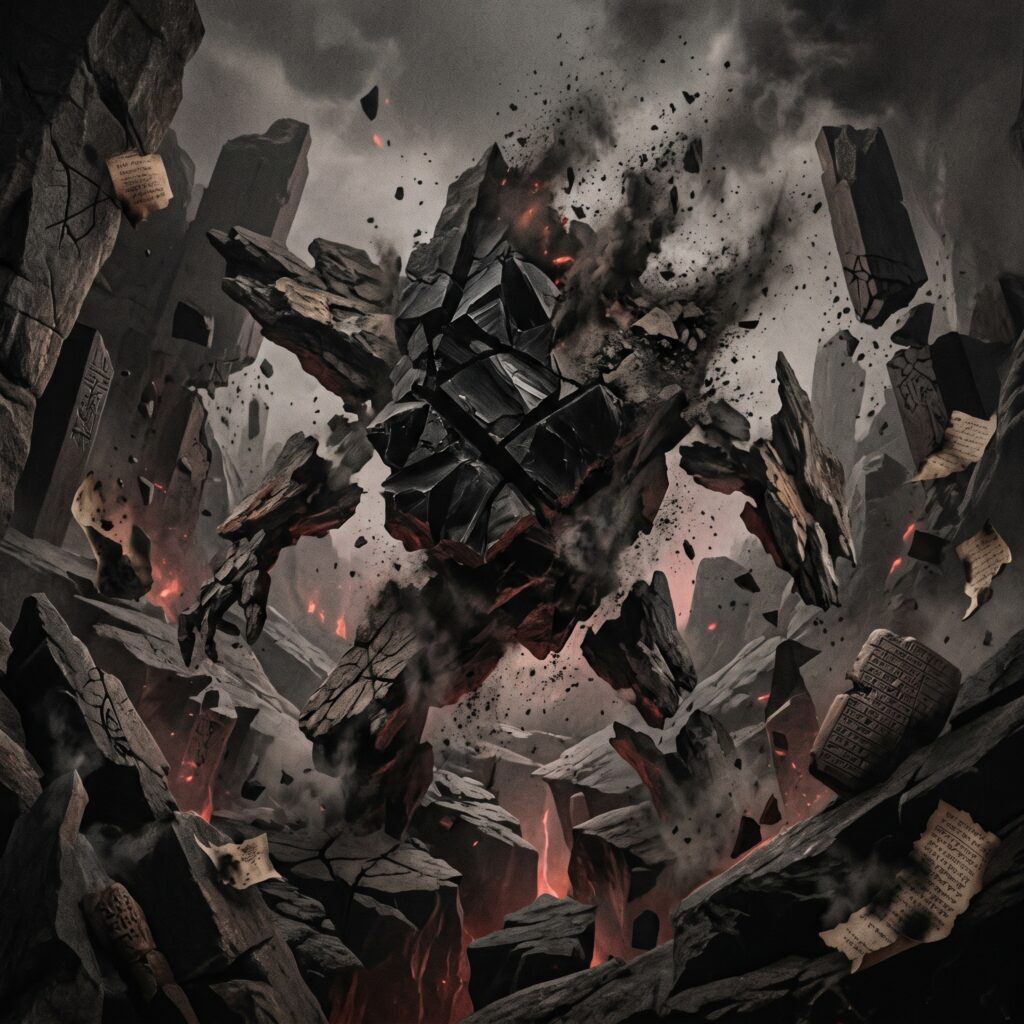
1. What This Entity Is
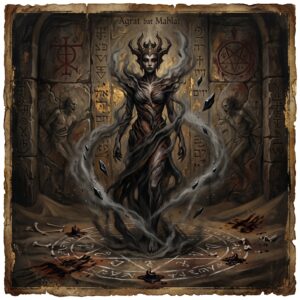
Asag is a mountain demon from Sumerian tradition, appearing as the primary adversary of the warrior god Ninurta in the Lugal-e epic (circa 2nd millennium BCE). In Akkadian transmission, the name becomes Asakku and shifts from a specific named demon to a whole class of malevolent forces.
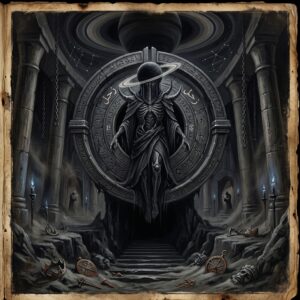
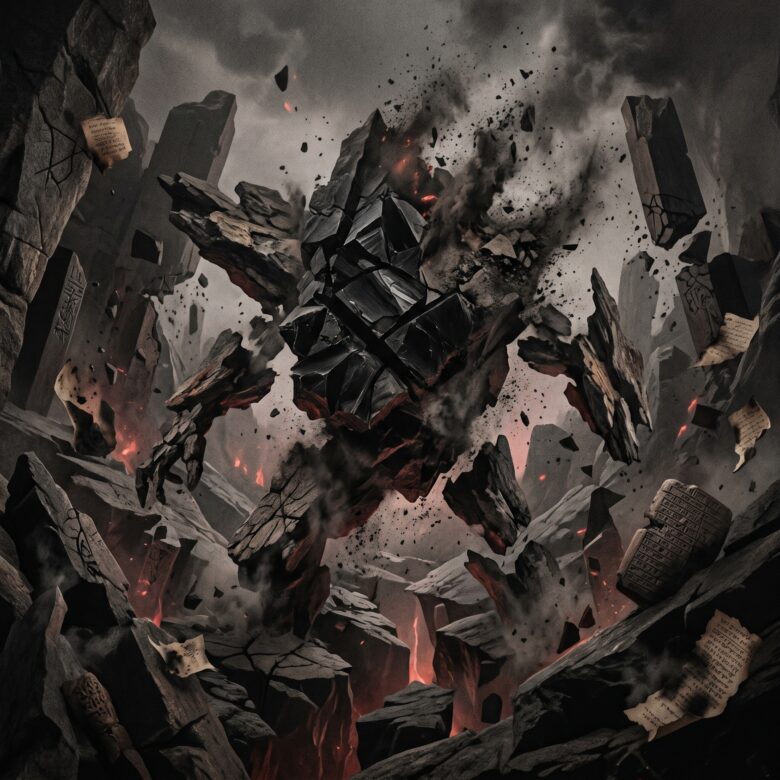
In his original form, Asag is territorial. He lives in the mountains. He commands an army of stone warriors called the ur-ra. His presence dries springs, blocks irrigation channels, and turns fertile land sterile. He is not a wandering ghost or a household threat. He is the chaos of the highlands pressing against lowland civilization.
He has no temple, no offerings, no cult. He exists in the record as a narrative figure: the chaos that must be killed so that ordered agriculture can exist.
The Akkadian asakku class differs. These demons cause fever, plague, skin diseases, and moral contamination. They are diagnosed and expelled through exorcistic rituals. But the singular Asag of the Lugal-e has no attested ritual interface at all.
2. Core Behavior Pattern
Asag in the Lugal-e behaves like a territorial force of geographic disruption. He does not chase people across thresholds or possess bodies. He occupies space—specifically the highlands—and from there disrupts the water systems that lowland farming depends on.
His presence dries springs. His stone army blocks irrigation channels. The land becomes barren not because he curses it but because his presence is the sterility of the mountain.
When Ninurta confronts him, Asag fights. He does not negotiate or flee. He is defeated and killed. His body—or rather, the stones of his army and his mountain—are reorganized into the structured geography of Mesopotamia: mountains placed at the edges, irrigation channels carved, fertile land separated from waste.
The asakku class behaves differently. These are affliction demons. They enter bodies. They cause fever, skin lesions, and a sense of moral defilement. They are diagnosed by symptoms and expelled through incantation. They have no territory. They have victims.
3. Traditional Contact Methods
For the singular Asag: None. He is never invoked, offered to, or contacted in any surviving source. The Lugal-e was recited and copied as a narrative of Ninurta’s victory—not as a ritual address to the demon.
For the asakku class: Contact is adversarial and expulsive.
- Identification through symptoms (fever, skin disease, contamination)
- Incantations from the Udug-hul (“Evil Demons”) series
- Apotropaic plants (tamarisk, juniper) burned or placed
- Ritual disposal of contaminants to remove the demon from body or house
The formula: name it, expel it. No offerings. No bargaining. No invocation to appear.
What does not exist: Any traditional method for calling Asag to presence, requesting his aid, or working with him as an ally. That is modern invention, not transmission.
4. How Practitioners Work With It
Engagement Modes
For asakku class (attested): Exorcistic expulsion. The practitioner works as an āšipu (exorcist priest), requiring knowledge of symptom patterns, correct incantations, and proper use of apotropaic substances.
Workflow:
- Diagnosis: identify asakku as cause of fever, plague, or skin disease
- Preparation: gather apotropaic plants, prepare ritual space
- Incantation: recite expulsion formulas, naming the asakku
- Disposal: remove ritual materials and contaminants from the area
For singular Asag (not attested in tradition): No documented engagement mode exists. Modern practitioners who claim to invoke Asag are operating outside traditional frameworks. This dossier does not provide guidance for that mode because the sources provide no baseline.
Practitioner Effects (Traditional Expulsive Context)
For the exorcist working with asakku expulsion, documented effects include:
- Development of diagnostic precision
- Strengthened ritual memory and procedural discipline
- Increased capacity to maintain structure under pressure
There is no relationship with the entity. Only removal.
LHP / Wrathful Frame Note
The asakku class is not a wrathful transformative force in the sense of initiatory adversarial work. It is a target of expulsion. The singular Asag has no documented use in Left Hand Path or sovereignty-testing contexts. Claims otherwise are modern reconstruction, not traditional practice.
5. Conditions for Stable or Functional Work
For asakku expulsion:
- Correct diagnosis is essential. Mistaking asakku for another demon class invalidates the ritual.
- Incantations must be recited accurately. Errors reduce efficacy.
- Apotropaic substances must be correct and properly prepared.
- The practitioner should be ritually clean (standard Mesopotamian purity requirements).
Destabilizing conditions:
- Ritual error may fail to remove the asakku
- No documented backlash—just continued affliction
For singular Asag: No conditions exist because no contact is attested in tradition.
6. Cross-Tradition Behavior
| Aspect | Sumerian (Asag) | Akkadian (asakku) |
|---|---|---|
| Type | Individuated named demon | Class / category of demons |
| Domain | Mountain (territorial) | Body (affliction) |
| Threat | Sterility, water disruption | Fever, plague, skin disease |
| Interaction mode | None (narrative only) | Expulsion through exorcism |
Later traditions preserve asakku as a demon type but lose the individuated Asag almost entirely. The shift from proper name to common noun is rare in Mesopotamian demonology.
Functional parallels elsewhere (structural, not genealogical):
- Vritra (Indo-Iranian): serpent who blocks waters, slain by Indra. Strong parallel on the water-blocking function.
- Typhon (Greek): chthonic monster buried under mountains after defeat.
- Rock giants (Norse): mountain-dwelling chaotic forces opposed to lowland order.
7. Long-Term Effects of Engagement
For asakku exorcist (attested): Repeated practice builds diagnostic skill, procedural memory, and confidence in handling malevolent forces. The relationship remains adversarial and transactional—expel and move on. No long-term alliance or ongoing contact is documented.
For anyone attempting sustained engagement with the singular Asag: There is no traditional model for this. Modern practitioners who claim to invoke Asag are working outside documented tradition. The dossier cannot predict outcomes because the sources provide no baseline. The entity being engaged is likely a modern construct bearing an ancient name.
8. Practitioner Notes (Real-World Use)
Who tends to work with asakku exorcism: Trained exorcists within institutional Mesopotamian religion. In modern practice, someone with strong diagnostic skills, ritual precision, and emotional stability would be best suited. This is not work for improvisation or emotional exploration.
Who should avoid: Anyone prone to ritual errors, unable to maintain procedural discipline, or seeking a relationship rather than an expulsion. The work is adversarial. Do not approach asakku as allies or teachers.
Solo vs institutional: Attested tradition is institutional (temple-based exorcists). Modern solitary practice could replicate the forms but lacks the institutional validation. Proceed with awareness that you are working outside the original social container.
Compatibility with other systems: Asakku expulsion fits within the broader Mesopotamian exorcistic framework. It assumes a cosmos where demons are diagnosed, named, and expelled. It does not assume the demon can be commanded through Solomonic seals, bound through Christian ritual, or befriended through Neopagan invocation. Mixing systems may produce unpredictable results.
For the singular Asag: The dossier recommends against treating a narrative figure with no ritual interface as a contactable entity. If you choose to work with Asag despite the absence of traditional methods, you are inventing—not recovering. Be clear about that distinction.